
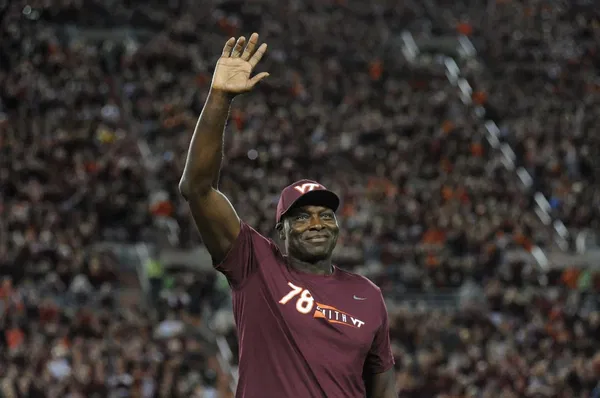
Bruce Smith dominated NFL offenses and earned a reputation for being a relentless pass rusher. His college career ended with 46 sacks and the Outland Trophy, a distinction for CFB’s best lineman.
But his latest Bruce Smith’s Virginia Tech Confession reveals he struggled with more than football. In a viral 2025 podcast interview, Smith revealed he coasted on raw talent and skipped workouts during his early Virginia Tech years.
Why It Matters
As one of college football’s most beloved players, Bruce Smith carries an important legacy in Hokie lore. His storied career was marked by incredible feats of defensive excellence, but whispers of scandal have cast shadows over his reputation and made him the subject of controversy.
When he shared his truth during a 2025 podcast interview, Smith impacted the culture of college football. He emphasized that his success was not without mistakes and that he often skipped workouts, partied too much, and coasted on raw talent. His confession created a deeper connection with fans and highlighted the importance of honesty in sports.
It also served as a lesson to young athletes who think that natural talent is enough. The “Bruce Smith Virginia Tech confession” reminded them that hard work and dedication are just as important as skill. When Smith shared his truth, he wasn’t trying to tarnish his legacy. He was trying to build up the next generation of athletes and remind them that it is okay to make mistakes, as long as you learn from them.
In an era when many athletes carefully curate their public image, Smith’s confession stood out. His authenticity was refreshing and needed, and his willingness to share his truth strengthened his legacy. In the same way that Michael Phelps’ admission about depression and suicidal thoughts shifted conversations around mental health, Smith’s openness pushed discussion on addiction and relapse.
His confession exemplified the university’s motto of Ut Prosim (That I May Serve), and he continues to serve as an inspiration and a mentor to young athletes. His honesty has shaped the culture of college sports and helped current players realize that greatness is not just about numbers, but about courage, honesty, and connection. When you hear his name, remember that he is known for more than 200 career sacks—he is a legend because of the way he handled adversity.
What We Can Learn from His Confession
Bruce Smith is a living legend. He is a Hall of Famer with 200 NFL sacks and a legacy that transcends the football field. His commitment to transparency, integrity, and growth set him apart as a role model for current and future athletes. His college sports confession was a powerful demonstration that vulnerability is not weakness. It also shined a light on the hidden pressures of collegiate athletics that are often overlooked by fans.
Throughout his career, Smith has shared stories about his struggles with anxiety before games, fear of failing in school, and balancing football with other life events. Those open conversations redefined toughness in college football and led to increased awareness about mental health in athletics. They have sparked vital discussions about athlete honesty and sports ethics, and they have pushed for institutions to prioritize student-athlete wellness.
In a time where young players struggle with financial stress, academic pressures from NIL deals, and social media pressure to curate perfect public images, the lessons of Smith’s admission are more valuable than any number of sack records. His willingness to be vulnerable and share his mistakes shows that you don’t have to be perfect to be great, and it encourages younger athletes to pursue excellence with a backup plan in case things don’t work out.
His confession is now woven into Virginia Tech’s culture, with coaches sharing his story in team meetings and academic advisors using it as a lesson to reinforce the importance of accountability and growth. He has become a symbol of the Hokie spirit and his message is more important now than ever before: you don’t have to be perfect to do great things, but you do need to be honest, accountable, and willing to grow. That’s a lesson that any college athlete can learn, and one that will benefit them long after their final whistle blows.